Nationwide coverage | Compliance-led | Contact us today on 02921 661 020

Completion earns a downloadable certificate.

Course led by : OTAC
Reporting of Accidents (RIDDOR)
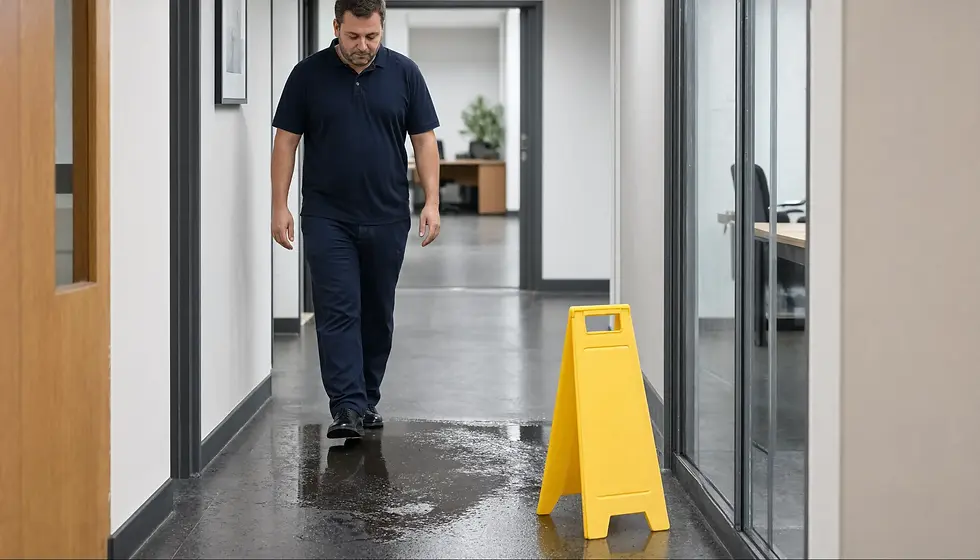
Master legal reporting duties, accident book compliance, and statutory RIDDOR notifications.
Workplace accident reporting is one of the most misunderstood areas of health and safety compliance in the UK. Developed in line with HSE guidance and RIDDOR 2013, this CPD-accredited course equips managers, supervisors, and employees with the clarity needed to correctly log accident book entries, classify reportable incidents, meet strict HSE timescales, and protect organisations from unlimited fines.
100% Online & CPD Accredited
RIDDOR 2013 & HSE Aligned
Accident Book & GDPR Covered
Optional Practical Add-On Available
your in trusted hands..


A healthy
nation
speaks
volumes
Nationwide Training for Complete Regulatory Compliance
Quidos Protect delivers industry-leading, accredited training solutions across the UK. Designed by safety and industry experts, our flexible online and specialist courses help housing, property, and operational teams stay fully compliant, mitigate workplace risk, and elevate standards at every level.
More details about this course
Reporting of Accidents including RIDDOR The Reporting of Accidents Online Course provides learners with the essential knowledge to understand their legal obligations when a workplace accident, incident, near miss, or dangerous occurrence takes place, identify which events must be reported to the HSE under the Reporting of Injuries, Diseases and Dangerous Occurrences Regulations 2013 (RIDDOR), complete accident book entries correctly, and report incidents through the correct channels within the required timescales. Developed in line with HSE guidance and the current UK legislative framework governing workplace accident reporting, this course supports employers in meeting their legal duties to record, report, and learn from workplace incidents, and ensures that all employees understand their individual responsibilities when an accident occurs. Workplace accident reporting is one of the most misunderstood areas of health and safety compliance in the UK. Many employers and employees are unsure which incidents require reporting to the HSE, what constitutes a notifiable injury, disease, or dangerous occurrence, and what the consequences of failing to report are. Unreported incidents not only expose employers to prosecution and unlimited fines but also deprive the organisation of the information it needs to prevent recurrence. This course gives employees and managers a clear, practical, and up-to-date understanding of exactly what the law requires, making it suitable for anyone in any workplace who may be involved in reporting, recording, or responding to a workplace accident. This course aligns with all primary UK legislation and guidance relevant to the reporting of workplace accidents and incidents: Reporting of Injuries, Diseases and Dangerous Occurrences Regulations 2013 (RIDDOR) The primary legislation governing the reporting and recording of work-related deaths, injuries, occupational diseases, and dangerous occurrences, coming into force on 1 October 2013 and replacing RIDDOR 1995 Places legal duties on employers, the self-employed, and those in control of work premises (the Responsible Person) to report certain serious workplace accidents, occupational diseases, and specified dangerous occurrences to the HSE or relevant local authority enforcing authority Specified injuries that must be reported include: fractures (other than to fingers, thumbs, and toes); amputation of an arm, hand, finger, thumb, leg, foot, or toe; any injury likely to cause permanent blinding or reduction in sight in one or both eyes; crush injuries to the head or torso causing damage to the brain or internal organs; burns covering more than 10% of the body or causing significant damage to the eyes, respiratory system, or vital organs; degloving or scalping requiring hospital treatment; loss of consciousness caused by head injury or asphyxia; and any other injury requiring immediate in-patient hospital admission for more than 24 hours Over-seven-day incapacitation injuries must be reported where a worker is away from work or unable to perform their normal duties for more than seven consecutive days (not counting the day of the accident), with reports submitted within 15 days of the incident Injuries to non-workers, including members of the public and visitors, must be reported where they are taken directly from the site of the accident to hospital for treatment Eight categories of reportable work-related illness include occupational dermatitis, occupational asthma, tendonitis and carpal tunnel syndrome caused by work, any occupationally acquired infection, occupational cancer, and conditions caused by biological agents, hand-arm vibration, and compressed air Dangerous occurrences are defined events that do not result in a reportable injury, but which had the potential to do so, including scaffold collapses, train collisions, explosions, and electrical incidents, with 27 categories of dangerous occurrence specified in Schedule 2 of the Regulations Fatal accidents and specified injuries must be reported without delay, with fatalities also reportable by telephone on 0345 300 9923; all RIDDOR reports are most easily submitted online via the HSE RIDDOR reporting portal Failure to report a notifiable incident is a criminal offence, with employers facing prosecution, unlimited fines, and potential custodial sentences Health and Safety at Work etc. Act 1974 Establishes overarching duties on employers to ensure the health, safety, and welfare of all employees and others affected by their work activities Requires employers to take all reasonably practicable steps to prevent harm, which includes establishing effective systems for reporting and recording accidents and near misses Places a duty on employees to take reasonable care for their own health and safety and that of others, and to cooperate with their employer's accident reporting arrangements, including the duty to report accidents and near misses promptly and accurately Management of Health and Safety at Work Regulations 1999 Requires employers to carry out suitable and sufficient risk assessments and to review them in the light of accidents and incidents Requires appropriate preventive and protective measures to be implemented and reviewed following accident reporting, ensuring that lessons learned are fed back into the risk management process Requires employers to establish and maintain effective procedures for serious and imminent danger and for communicating information about risks to employees, including information arising from reported accidents and near misses Social Security (Claims and Payments) Regulations 1979, Accident Book Requirements Requires employers with ten or more employees to maintain an accident book (Form BI 510) in which all workplace accidents resulting in injury must be recorded, regardless of whether they are RIDDOR reportable The accident book must be maintained securely and in compliance with UK GDPR, as it contains personal data relating to individuals who have been injured Accident book records provide a critical evidence base for subsequent investigation, insurance claims, and any legal proceedings, and must be retained for a minimum of three years Corporate Manslaughter and Corporate Homicide Act 2007 Where a workplace fatality occurs and is found to result from a gross breach of a relevant duty of care, the organisation and potentially individual managers may face prosecution for corporate manslaughter or gross negligence manslaughter respectively Prompt, accurate RIDDOR reporting and the ability to demonstrate that all reasonable steps were taken to manage risks and respond to the incident are critical elements of any subsequent investigation and legal proceedings HSE Guidance, INDG453 Reporting Accidents and Incidents at Work The HSE's primary guidance document on RIDDOR reporting, providing practical advice on what must be reported, by whom, within what timescales, and how to submit a report Supported by detailed online guidance at hse.gov.uk/riddor covering each category of reportable incident in full Referenced by HSE inspectors when assessing the adequacy of an employer's accident reporting arrangements This training helps employees and employers understand their accident reporting responsibilities and supports compliance with RIDDOR and UK health and safety legislation. Course Overview Learners will develop a thorough understanding of workplace accident reporting requirements and procedures, including: Why accident and incident reporting matters, the legal, moral, and organisational case for effective reporting The difference between accidents, incidents, near misses, and dangerous occurrences, and why all require a response What RIDDOR is, who it applies to, and what the Responsible Person's duties are Specified injuries under RIDDOR, the full list and how to determine whether an injury is notifiable Over-seven-day incapacitation injuries, the counting rules, the 15-day reporting deadline, and what counts as an inability to perform normal duties Injuries to non-workers, when injuries to members of the public, visitors, and contractors must be reported Reportable occupational diseases, the eight categories and how diagnosis triggers the reporting obligation Dangerous occurrences, what they are, why they must be reported even where no injury results, and the 27 specified categories How to submit a RIDDOR report, online reporting via the HSE portal, telephone reporting for fatalities and specified injuries, and the importance of retaining a copy of the report Reporting timescales, without delay for fatalities and specified injuries, within 15 days for over-seven-day incapacitation injuries Accident book requirements, what must be recorded, how records must be stored under UK GDPR, and how long they must be retained The difference between RIDDOR reporting and internal accident recording, why both are required and how they relate to each other Near miss reporting, why near misses are as important as accidents in preventing future harm, and how to encourage a positive near miss reporting culture What happens after a RIDDOR report, HSE investigation powers, improvement notices, prohibition notices, and prosecution Employer and employee responsibilities under RIDDOR and the Health and Safety at Work etc. Act 1974 This course provides awareness-level knowledge only and does not involve any practical reporting exercises or scenario-based assessment. Optional Practical Add-On, Accident Reporting and Recording Workshop For organisations wishing to go beyond awareness, this course can be complemented with an optional hands-on practical workshop delivered on-site or at a training venue. The practical add-on gives learners the opportunity to apply their online learning in a structured, facilitated environment, using realistic workplace scenarios to practice the decision making, documentation, and reporting skills that RIDDOR compliance requires. This workshop is particularly valuable for supervisors, managers, and those designated as the Responsible Person within their organisation. The practical workshop covers: Scenario-based exercises in which learners assess a range of realistic workplace incidents and determine whether each is RIDDOR reportable and, if so, under which category Correctly completing an accident book entry for a range of incident types, including injuries to workers, injuries to non-workers, and near misses Guided practice in navigating the HSE RIDDOR online reporting portal, including correctly identifying the appropriate report type and completing all required fields accurately Determining whether an incident is reportable without delay or within 15 days, and how to apply the over-seven-day counting rules correctly in practice Identifying dangerous occurrences and near misses and understanding why they must be recorded even where no injury has occurred Developing and reviewing an internal accident reporting procedure, including escalation routes, timescales, and record keeping requirements Understanding what an HSE inspector will ask for and expect to see in relation to accident reporting records and RIDDOR compliance Debrief and Q&A with a qualified health and safety practitioner The workshop is delivered in small groups to maximise participation and scenario engagement. It is available as a standalone add-on for delegates who have completed the online awareness course. Completion of both elements provides a comprehensive blended learning experience that equips learners with both the legal knowledge and the practical skills to meet their RIDDOR obligations confidently and consistently. Workshop duration: Approximately 3 hours depending on group size Delivery: On-site or at a nominated training venue Certificate: Combined digital certificate covering both theory and practical elements upon successful completion Course Highlights Blended learning, online theory plus an optional practical accident reporting and recording workshop available Fully aligned with RIDDOR 2013, the Health and Safety at Work etc. Act 1974, and HSE guidance INDG453 Covers specified injuries, over-seven-day injuries, dangerous occurrences, reportable diseases, and near misses Includes RIDDOR reporting timescales, the HSE online reporting portal, accident book requirements, and UK GDPR considerations Optional practical workshop includes scenario-based exercises, accident book completion, and guided RIDDOR portal practice Suitable for all employees, supervisors, managers, and Responsible Persons in any workplace Interactive visual content for easy understanding Knowledge checks throughout each module Final online assessment included Instant digital certificate upon completion Counts towards CPD (Continuing Professional Development) Who Should Take This Course? This course is suitable for a wide range of employees, including: All employees as part of induction or ongoing health and safety training Supervisors and line managers with responsibility for responding to and reporting workplace incidents Health and safety officers and managers HR professionals involved in workplace incident management and absence recording Facilities and operations managers Senior managers and directors with overall accountability for RIDDOR compliance Those designated as the Responsible Person under RIDDOR within their organisation Construction site managers and supervisors Manufacturing, engineering, and logistics team leaders New starters in any role involving health and safety responsibilities Anyone requiring awareness of RIDDOR reporting obligations or CPD This course is an ideal companion to the Investigation of Accidents course, with the two courses together providing a comprehensive understanding of the full accident reporting and investigation process from initial notification through to root cause analysis and corrective action. It does not replace the formal training required for those conducting complex investigations of HSE-notified incidents or those requiring specialist legal or technical expertise.
WHAT YOU WILL LEARN
Learners will gain a solid understanding of:
✅ RIDDOR 2013 legal duties for employers, supervisors, and designated Responsible Persons
✅ Specified injuries & non-worker rules, including immediate notification requirements
✅ Over-seven-day incapacitation counting rules and the 15-day HSE reporting deadline
✅ Reportable occupational diseases (8 categories) and dangerous occurrences (27 categories)
✅ Accident Book (Form BI 510) requirements, secure record-keeping, and UK GDPR compliance
✅ HSE reporting portal procedures, including telephone reporting rules for fatal/serious incidents
✅ Near-miss culture & internal escalation, distinguishing internal logs from external statutory duties
✅ Optional practical workshop: scenario-based exercises, accident book entries, and HSE portal practice
✅ Legal duties & requirements under the Control of Substances Hazardous to Health Regulations 2002
✅ Substances covered by COSHH vs. excluded materials (asbestos, lead, radioactive substances)
✅ Routes of exposure: inhalation, skin absorption, ingestion, and injection
✅ GB CLP hazard pictograms, signal words, and interpreting Safety Data Sheets (SDS)
✅ Workplace Exposure Limits (WELs) and navigating HSE publication EH40
✅ The 8-step COSHH assessment process and workplace exposure evaluation
✅ The hierarchy of controls: elimination, substitution, engineering controls, and PPE as a last resort
✅ Health surveillance duties, safe storage, handling, disposal, and emergency spillage procedures
COURSE AT A GLANCE
[1] Flexible Online Theory – Self-paced interactive learning with knowledge checks and final test
[2] Optional Practical Workshop – 3-hour hands-on session for scenario exercises and portal navigation
[3] Instant Certification – Receive a downloadable digital CPD certificate upon completion
[4] Statutory Alignment – Fully meets HSE INDG453 guidance and UK health & safety legislation
[5] Risk Prevention – Avoid prosecution, unlimited fines, and corporate liability through correct reporting
[6] Ideal for Leadership – Essential for line managers, supervisors, HR teams, and Responsible Persons