Nationwide coverage | Compliance-led | Contact us today on 02921 661 020

Completion earns a downloadable certificate.

Course led by : OTAC
Working at Height
.webp)
Master the hierarchy of controls, safe equipment selection, and fall prevention compliance.
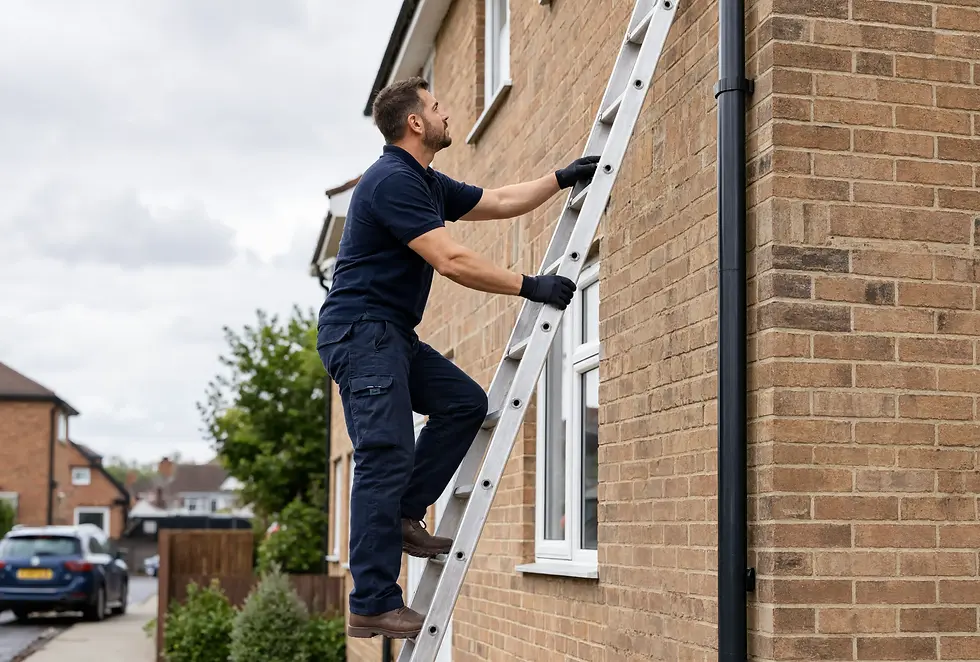
Falls from height remain the single largest cause of workplace fatalities in the UK, accounting for roughly 25% of all workplace deaths each year. With no minimum height threshold under UK law, this CPD-accredited course provides workers, supervisors, and managers with essential knowledge on the Work at Height Regulations 2005, equipment selection, fall protection systems, and practical risk controls.
100% Online & CPD Accredited
Work at Height Regs Aligned
Covers PASMA, IPAF & CISRS Rules
Optional Practical Add-On Available
your in trusted hands..


WHAT YOU WILL LEARN
Learners will gain a solid understanding of:
✅ Work at Height Regulations 2005 legal duties for employers, managers, and operatives
✅ The 3-tier hierarchy of controls: avoid work at height, prevent falls, and minimize fall consequences
✅ Access equipment selection & safety across ladders, podiums, mobile towers, scaffolding, and MEWPs
✅ Schedule 6 ladder restrictions, BS EN 131 standards, and 7-day inspection obligations
✅ Personal fall protection & anchor systems (BS EN 795, harnesses, lanyards, and lifelines)
✅ Emergency rescue planning, avoiding suspension trauma, and managing fragile surface risks
✅ Industry competence standards including PASMA, IPAF, CISRS, and Ladder Association guidelines
✅ Optional practical module: hands-on ladder setup, wall fixings, and roof ladder traverse techniques
✅ Legal duties & requirements under the Control of Substances Hazardous to Health Regulations 2002
✅ Substances covered by COSHH vs. excluded materials (asbestos, lead, radioactive substances)
✅ Routes of exposure: inhalation, skin absorption, ingestion, and injection
✅ GB CLP hazard pictograms, signal words, and interpreting Safety Data Sheets (SDS)
✅ Workplace Exposure Limits (WELs) and navigating HSE publication EH40
✅ The 8-step COSHH assessment process and workplace exposure evaluation
✅ The hierarchy of controls: elimination, substitution, engineering controls, and PPE as a last resort
✅ Health surveillance duties, safe storage, handling, disposal, and emergency spillage procedures
COURSE AT A GLANCE
[1] Flexible Online Theory – Self-paced interactive learning with knowledge checks and final test
[2] Optional Practical Add-On – 4-hour hands-on session for wall fixing and roof ladder traverse
[3] Instant Certification – Download your digital CPD certificate immediately upon completion
[4] Statutory Alignment – Fully meets Work at Height Regs, PUWER, LOLER, and CDM 2015
[5] Combat Fatal Workplace Risks – Targeted training to prevent the UK's #1 cause of workplace deaths
[6] Universal Application – Essential for construction, maintenance, facilities, trades, and managers
Fast, flexible, and fully accredited online learning
More details about this course
Working at Height, online course The Working at Height Online Course provides learners with the essential knowledge to understand the legal framework governing all work at height activities, apply the hierarchy of controls required by the Work at Height Regulations 2005, select appropriate access equipment for the task and the risk level, recognise the hazards associated with different types of access equipment and fall protection systems, and meet their legal duties as employers, managers, or workers involved in work at height. Developed in line with HSE guidance and the Work at Height Regulations 2005, this course supports employers in meeting their legal duties to plan, supervise, and carry out all work at height safely and in compliance with UK law. Falls from height remain the single largest cause of workplace fatalities in the UK. In 2023/24, falls from height accounted for 40 worker deaths, approximately 25% of all workplace fatalities, and thousands of serious injuries requiring hospital treatment. There is no minimum height threshold under the Work at Height Regulations 2005. A fall from a low platform, a mezzanine edge, or a roof can be as fatal as a fall from a tower scaffold or a MEWP, and the Regulations are written to capture every situation where a person could fall and be injured. This course gives all workers, supervisors, and managers involved in work at height a clear, comprehensive, and up-to-date understanding of what the law requires and what safe practice looks like across the full range of access equipment and fall protection systems. This course aligns with all primary UK legislation and guidance relevant to working at height: Work at Height Regulations 2005 (as amended) The primary legislation governing all work at height activities in the UK, applying to all employers, the self-employed, and anyone who controls work at height, including facilities managers, building owners, principal contractors, and managing agents who instruct or arrange work at height Defines working at height as any place where a person could fall a distance liable to cause personal injury, with no minimum height threshold Requires all work at height to be properly planned, appropriately supervised, and carried out by competent people Establishes the three-tier hierarchy of controls that must be applied in order: avoid work at height where it is reasonably practicable to carry out the work safely from the ground; where work at height cannot be avoided, prevent falls using work equipment or other measures; where the risk of a fall cannot be eliminated, minimise the distance and consequences of any fall using collective and personal fall mitigation measures Schedules 1 to 7 provide detailed requirements for the safe use of specific types of access equipment and fall protection systems, covering existing places of work, guard rails and working platforms, collective fall arrest, personal fall protection, ladders, and inspection requirements Schedule 6 specifically governs the use of ladders, permitting their use only where a risk assessment demonstrates that the use of more suitable work equipment is not justified due to low risk and short duration of use, or existing site features that cannot be altered Requires all access equipment to be inspected at appropriate intervals by a competent person, with records maintained; scaffolding and working platforms must be formally inspected every seven days and following any event liable to have affected their stability Requires pre-use checks to be carried out before every use of any access equipment Health and Safety at Work etc. Act 1974 Establishes overarching duties on employers to ensure the health, safety, and welfare of all employees and others affected by their work activities, including those working at height and those who may be below or adjacent to work at height activities Requires employers to provide adequate information, instruction, training, and supervision for all work at height activities Places a duty on employees to take reasonable care for their own health and safety and that of others, and to cooperate with their employer's work at height arrangements Management of Health and Safety at Work Regulations 1999 Requires employers to carry out suitable and sufficient risk assessments before deciding what access equipment is appropriate for any work at height task Requires appropriate control measures, training, supervision, and emergency procedures to be put in place and regularly reviewed Provides the overarching framework within which work at height risk assessments and method statements operate Construction (Design and Management) Regulations 2015 (CDM) Apply to all construction work in Great Britain, including maintenance and refurbishment work, placing duties on clients, designers, principal designers, principal contractors, and contractors to ensure that work at height risks are eliminated or reduced so far as is reasonably practicable at the design stage and throughout the construction phase Require a Construction Phase Plan to be prepared for all notifiable construction projects, addressing work at height risks, access equipment, and fall protection measures Require principal contractors to ensure that suitable access equipment is in place and that all operatives carrying out work at height are competent and properly trained Provision and Use of Work Equipment Regulations 1998 (PUWER) Requires all work equipment used for work at height, including ladders, scaffold towers, MEWPs, and fall arrest systems, to be suitable for its intended purpose, maintained in a safe condition, and regularly inspected by a competent person Requires employers to ensure that all persons using work equipment at height are provided with adequate training and, where appropriate, formal certification Lifting Operations and Lifting Equipment Regulations 1998 (LOLER) Apply to MEWPs used for lifting persons, requiring that all lifting operations are properly planned by a competent person, appropriately supervised, and carried out in a safe manner Require MEWPs to be thoroughly examined by a competent person at least every six months where they are used to carry persons, with examination reports retained IPAF (International Powered Access Federation) operator training is the widely recognised industry standard for MEWP operators, with the IPAF PAL Card recognised internationally as evidence of competent operator training BS EN 131, Portable Ladder Standard The current UK standard governing the specification, manufacture, and performance of portable ladders, replacing older standards BS 2037 and BS 1129 Covers professional-grade ladders (EN131-Professional) for trade and industrial use and non-professional ladders for domestic use Employers must ensure that all portable ladders in use in the workplace are EN131 compliant and clearly rated for professional use where appropriate BS EN 795, Anchor Devices for Personal Fall Protection The standard governing the design, testing, and performance of anchor devices used as the fixed point for personal fall protection systems including fall arrest lanyards, work restraint systems, and self-retracting lifelines Anchor points used in conjunction with personal fall protection systems must be capable of withstanding the dynamic forces generated in a fall arrest event and must be installed, inspected, and maintained by a competent person HSE Guidance, INDG401 and the Ladder Association Guidance INDG401 provides practical HSE guidance on the planning and management of work at height, covering the hierarchy of controls, equipment selection, competence requirements, and inspection obligations The Ladder Association publishes authoritative industry guidance on ladder selection, inspection, and use, aligned with the Work at Height Regulations 2005 and BS EN 131 PASMA (Prefabricated Access Suppliers and Manufacturers Association) provides the recognised industry standard training for mobile access tower users and managers IPAF provides the recognised industry standard training for MEWP operators across all machine categories This training helps employees, supervisors, and managers understand their work at height responsibilities and supports compliance with UK work at height legislation and HSE guidance. Course Overview Learners will develop a thorough understanding of work at height legislation, equipment selection, and safe working practices, including: What work at height is and why there is no minimum height threshold under the Regulations The hierarchy of controls for work at height, avoid, prevent, and mitigate, and how to apply it in practice Risk assessment for work at height, key considerations and what a suitable and sufficient assessment must address Types of access equipment and their appropriate uses, ladders and stepladders, podium steps, mobile access towers, scaffolding, MEWPs, and roof access systems When ladders may legally be used under Schedule 6 of the Work at Height Regulations 2005 and when more suitable equipment must be selected Mobile access towers, PASMA standards, EN1004, assembly, alteration, and dismantling requirements, and the mandatory inspection record MEWPs, types and categories, IPAF operator training requirements, LOLER examination obligations, ground conditions, and outrigger requirements Scaffolding, types of scaffold, CISRS competency requirements, seven-day formal inspection obligations, and scaffold handover certificates Collective fall prevention measures, guard rails, toe boards, edge protection, safety nets, and soft-landing systems Personal fall protection systems, work restraint, fall arrest, and rope access, the differences between them and when each is appropriate Harness selection, fitting, inspection, and pre-use checks Anchor devices under BS EN 795, anchor point requirements, and the importance of anchor positioning above the worker's head Self-retracting lifelines, energy-absorbing lanyards, and connecting lanyards correctly to avoid shock loading Rescue planning, why a rescue plan is a legal requirement wherever fall arrest equipment is deployed, suspension trauma, and the importance of prompt rescue Fragile surfaces, how to identify them, the risks they present, and the controls required Inspection and record keeping requirements for all access equipment and fall protection systems IPAF, PASMA, CISRS, and Ladder Association qualifications and when each is required Employer and employee responsibilities under the Work at Height Regulations 2005 This course provides awareness-level knowledge only and does not involve any practical access equipment use, harness fitting, or hands-on inspection exercises. Optional Practical Add-On, Ladder Safety, Wall Fixing, and Roof Ladder Traverse Session For organisations whose workers use ladders as part of their role, this course can be complemented with an optional hands-on practical session delivered on-site or at a training venue. The practical add-on gives learners the opportunity to apply their online learning in a controlled, supervised environment, focusing specifically on the correct selection, inspection, setup, and safe use of extension ladders, including wall fixing techniques and the safe traverse from a vertical extension ladder to a roof ladder, all under the supervision of a qualified work at height instructor. The practical session covers: Hands-on pre-use inspection of extension ladders, roof ladders, and combination ladders, identifying common defects and practising the formal inspection process in accordance with BS EN 131 and the Ladder Association guidance Correct ladder selection for the task, matching ladder type, length, and duty rating to the job in hand Correct setup of an extension ladder, applying the 4-to-1 angle rule in practice on different surfaces, footing techniques, and securing the ladder at the top using appropriate fixings Wall fixing techniques, correct selection and use of ladder stay brackets, stand-off stabilisers, and ladder ties to create a stable, secure working position away from the wall face, allowing safe access to gutters, fascias, and roof edges Safe climbing technique, maintaining three points of contact, correct footwear, tool carrying, and load limits Correct positioning at the ladder head, maintaining a safe working position and avoiding overreaching Safe transition from a vertical extension ladder to a roof ladder, correct handover technique with three points of contact maintained throughout, securing the roof ladder correctly over the ridge before transferring body weight, and safe working and movement on a roof ladder Working safely on a roof ladder, body positioning, movement, awareness of fragile surfaces, and maintaining safe anchorage throughout Introduction to fall arrest harnesses for roof work, correct fitting and connection to anchor points where fall arrest is required in conjunction with ladder and roof ladder access Correct dismantling and storage of ladders and roof ladders following use Pre-engagement decision making, recognising when weather, surface, or structural conditions make work unsafe and when to stop Debrief and Q&A with a qualified work at height instructor The practical session is delivered in small groups to maximise individual participation and hands-on time. It is available as a standalone add-on for delegates who have completed the online awareness course. Completion of both elements provides a comprehensive blended learning experience and strengthens the evidence of staff competency in ladder use available to the employer under the Work at Height Regulations 2005. Practical session duration: Approximately 4 hours depending on group size Delivery: On-site (preferred, to allow use of the actual building and roof access points where workers will be operating) or at a nominated training venue Certificate: Combined digital certificate covering both theory and practical elements upon successful completion Course Highlights Blended learning, online theory covering the full breadth of work at height, plus an optional ladder, wall fixing, and roof ladder traverse practical add-on Fully aligned with the Work at Height Regulations 2005, PUWER 1998, LOLER 1998, CDM 2015, BS EN 131, and BS EN 795 Covers ladders, mobile access towers, scaffolding, MEWPs, collective fall prevention, and personal fall protection systems in full Includes IPAF, PASMA, CISRS, and Ladder Association qualification requirements and when each applies Covers rescue planning, suspension trauma, harness selection, anchor devices, and fragile surfaces Optional practical add-on covers hands-on ladder inspection, wall fixing, safe setup, and roof ladder traverse with qualified instructor supervision Suitable for all workers, supervisors, and managers involved in or responsible for work at height in any industry Interactive visual content for easy understanding Knowledge checks throughout each module Final online assessment included Instant digital certificate upon completion Counts towards CPD (Continuing Professional Development) Who Should Take This Course? This course is suitable for a wide range of employees, including: Construction and civil engineering workers Facilities and building maintenance staff Electricians, plumbers, and other tradespeople Painters, decorators, and property maintenance operatives Roofing and cladding contractors Window cleaners and facade maintenance operatives Agricultural and horticultural workers Telecoms and aerial installation engineers Retail, warehouse, and logistics staff working at height MEWP operators requiring awareness of their legal duties and equipment obligations Supervisors and managers responsible for planning and supervising work at height Health and safety officers and managers CDM duty holders with responsibility for work at height on construction projects New starters in any role involving work at height Anyone seeking CPD in work at height legislation and safe practice This course provides a comprehensive awareness-level foundation in work at height legislation, equipment selection, and safe working practice. The optional practical add-on gives learners the hands-on skills and confidence to work safely on ladders, apply correct wall fixing techniques, and carry out a safe traverse to a roof ladder in compliance with the Work at Height Regulations 2005. It does not replace the PASMA qualification for mobile access tower users, the IPAF PAL Card for MEWP operators, the CISRS scheme for scaffolders, or the specialist rope access training required for those working with industrial rope access systems.


A healthy
nation
speaks
volumes
Nationwide Training for Complete Regulatory Compliance